Modern Data Infrastructure in 2026: Enterprise Data Platform Tools, Architecture, and Buying Criteria
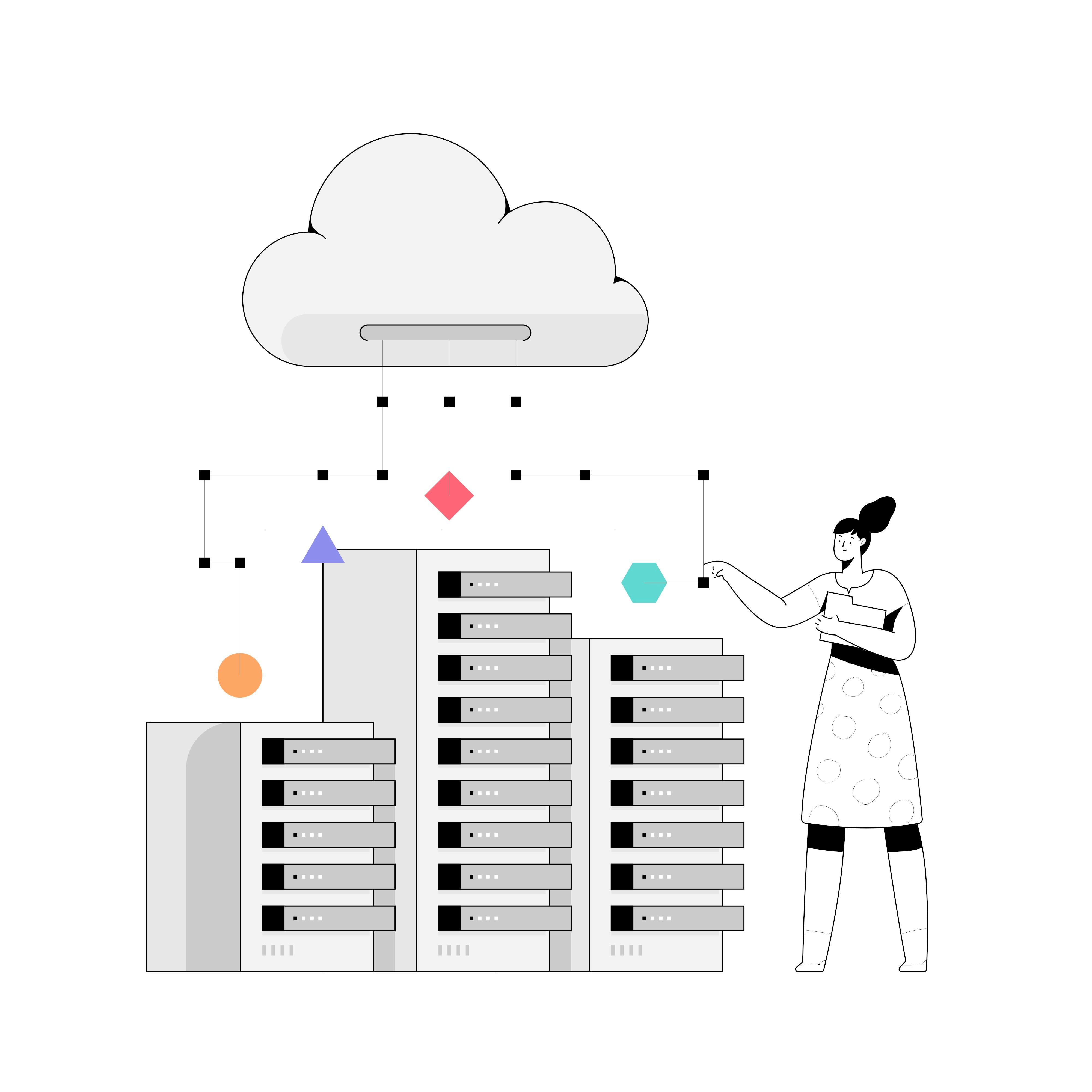
Enterprise data platforms have become the central procurement decision for data leaders who need to support analytics and AI from a single governed foundation. The buying criteria have shifted: what matters most in 2026 is whether a platform can produce trusted, reusable business context, not just move and store data efficiently. Gartner's 2026 data and analytics predictions continue to emphasize modernization, AI readiness, and governance as strategic priorities, and the vendor landscape reflects that shift.
An enterprise data platform is an interoperable set of capabilities spanning ingestion, storage, governance, semantic modeling, and consumption that enables an organization to treat data as a shared, governed asset across operational, analytical, and AI use cases. The strongest platforms make trusted context reusable, so teams build on shared definitions rather than re-deriving meaning in every dashboard or model prompt.
What an Enterprise Data Platform Means in 2026
Why the definition has changed
AI has made weak data foundations expensive in ways that were previously tolerable. When a copilot or agent surfaces a wrong answer because "customer" means different things in different systems, the cost is immediate and visible. Inconsistent business definitions, incomplete lineage, and fragmented entity models all degrade AI output quality at a pace that manual cleanup cannot match.
The previous generation of enterprise data architecture treated governance and semantics as optional layers on top of a warehouse or lake. That assumption no longer holds when retrieval-augmented generation pipelines, AI agents, and automated decision systems all depend on the same upstream definitions. Evaluation in 2026 centers on how well a platform preserves and exposes business meaning, not just how fast it processes queries.
Why point-tool thinking breaks down
A typical enterprise runs separate tools for ingestion, transformation, cataloging, quality, MDM, BI, and now AI orchestration. Each tool may define its own version of key entities, metric logic, or access policies. The result is duplicated business logic, governance gaps between layers, and brittle handoffs that break when any piece of the stack changes.
Consolidation does not mean replacing every tool with one vendor. It means selecting platforms that share context across layers so a business definition authored once can be consumed by a BI dashboard, a Cortex function in Snowflake, or an LLM-powered agent without re-creation. Buyers who continue evaluating tools in isolation tend to accumulate integration debt faster than they can retire it.
Core Architecture Layers of the Enterprise Data Platform
Comparing vendors by architectural layer is more productive than forcing head-to-head comparisons across the full stack. Most vendors are strong in one or two layers and weaker in others.
Ingestion and ELT
Reliable data movement is table stakes. Evaluate connectors by breadth and maintenance cadence, CDC support for low-latency replication, schema evolution handling, and delivery guarantees. Platforms like Fivetran and Airbyte own this layer; warehouses and lakehouses increasingly bundle basic ingestion, but dedicated tools still offer broader connector libraries.
Storage and compute
Warehouses (Snowflake, BigQuery), lakehouses (Databricks), and unified SaaS platforms (Microsoft Fabric) compete here. Open table formats like Apache Iceberg and Delta Lake have reduced lock-in by decoupling storage from compute, making interoperability a realistic buyer requirement rather than a theoretical one. Evaluate workload isolation, cost controls, and whether the storage layer supports multi-engine access.
Metadata, catalog, and governance
Active metadata is now a production requirement. OpenLineage provides an open standard for lineage collection across jobs and datasets, while platforms like DataHub and Atlan offer catalog, lineage, and policy enforcement as a control plane. Buyers should assess whether a governance platform passively documents metadata or actively enforces policies and propagates change.
MDM and entity resolution
Golden records and consistent entity identity across systems remain one of the hardest problems in enterprise data. Entity resolution requires probabilistic matching, human-in-the-loop stewardship, and cross-system mastering. This layer is where fragmentation causes the most downstream damage, because inconsistent customer, product, or supplier records propagate errors into every consuming system.
Knowledge graph and semantic layer
The term "semantic layer" covers a wide spectrum. The dbt Semantic Layer acts as a metric definition and translation layer between BI tools and underlying data models. Ontology-driven platforms go further: they model entities, relationships, and business rules as a reusable graph that can serve analytics, operational workflows, and AI retrieval. Buyers should evaluate the depth of semantic capability rather than relying on the label alone.
Analytics and AI consumption
Downstream tools (BI platforms, copilots, agents, custom applications) consume whatever context upstream layers provide. The quality of consumption depends almost entirely on how well upstream layers govern, define, and expose meaning. If every BI tool and AI agent must re-derive business definitions locally, the organization pays a compounding tax on inconsistency.
How to Evaluate Enterprise Data Platform Tools
Architectural fit
Start with what you already own. Evaluate how a new platform interoperates with your existing cloud provider, storage layer, compute engines, and APIs. Favor platforms that support open formats and metadata standards over those that require full migration. Ownership model matters too: can your team extend, override, or export definitions without vendor dependency?
Semantic and governance maturity
Assess lineage depth (column-level, cross-system), policy enforcement automation, entity resolution capability, and semantic modeling richness. A platform that offers a business glossary but no enforceable policy layer leaves governance as a suggestion. The NIST AI Risk Management Framework reinforces that AI readiness requires governance and trustworthiness, not just model access.
Production readiness
Observability, reliability under load, cost predictability, and orchestration integration all matter in production. Evaluate whether the platform supports both batch and real-time workloads, how it handles failure and retry, and what operational controls exist for cost management. A platform that demos well but lacks alerting, audit logs, or SLA guarantees is a risk in regulated environments.
AI readiness and time-to-value
AI readiness means governed enterprise context can reach copilots, retrieval systems, and agentic workflows in a form those systems can trust. Evaluate whether definitions, relationships, and policies are exposed through APIs, whether lineage extends into AI consumption, and how quickly a new use case can access existing context. Speed to trusted AI output is the metric that separates platforms with deep context from those with surface-level integrations.
Vendor Comparison Matrix
Vendor | Primary Layer | Key Strength | Notable Limitation | Governance Depth | Best Fit |
|---|---|---|---|---|---|
Galaxy | Semantic layer, knowledge graph | Ontology-driven context reusable across analytics and AI | Complementary layer, not a replacement for storage or ingestion | Deep (entity, relationship, policy modeling) | Enterprises unifying business meaning across existing systems |
Informatica | Integration, governance, MDM | Broadest enterprise data management suite | Complexity of full-platform adoption | Deep (catalog, quality, MDM, governance, privacy) | Organizations needing integrated governance and MDM |
Microsoft Fabric | Storage, compute, analytics | Unified SaaS analytics with OneLake and integrated workloads | Strongest in Microsoft-centric environments | Moderate (OneLake Catalog, tenant-level governance) | Microsoft-ecosystem enterprises consolidating analytics |
Palantir | Semantic layer, operations | Ontology as operational layer connecting data to workflows | High-touch deployment, suited to complex environments | Deep (ontology permissions, monitoring, operational enforcement) | Large enterprises with complex operational data needs |
Snowflake | Storage, compute, AI services | Warehouse-centric platform expanding into governed AI via Cortex | Semantic and entity modeling are thinner than specialist tools | Moderate (access policies, data sharing, Cortex governance) | Warehouse-centric organizations adding AI capabilities |
Databricks | Storage, compute, AI | Lakehouse architecture with Mosaic AI for production AI workflows | Governance and semantic layers still maturing | Moderate (Unity Catalog, Delta Lake integration) | Data engineering and ML-heavy organizations |
Tamr | MDM, entity resolution | AI-native entity resolution and golden record creation | Specialist, not a full enterprise platform | Narrow (focused on entity mastering quality) | Enterprises with severe entity fragmentation |
Atlan | Metadata, catalog, governance | Active metadata and collaborative governance | Does not cover storage, compute, or semantic modeling | Moderate-to-deep (lineage, policy, collaboration) | Teams prioritizing metadata-driven governance |
Fivetran | Ingestion | Managed ELT with broad connector library | Ingestion only, no downstream governance or semantics | Minimal | Teams needing reliable, low-maintenance data movement |
Vendor Profiles
Semantic context and knowledge graph platforms
Galaxy
Best for: Enterprises that need a shared, ontology-driven context layer across existing data systems to unify business meaning for both analytics and AI consumption.
Galaxy is an ontology-driven semantic data unification platform that sits across existing warehouses, catalogs, and pipelines as a shared context layer. Rather than replacing storage or ingestion tools, Galaxy models entities, relationships, and business rules in a knowledge graph that makes definitions reusable wherever they are consumed. The approach addresses a core problem in modern enterprise data architecture: business meaning gets fragmented across dozens of tools, and every new consumer (whether a BI dashboard or an AI agent) re-derives definitions independently.
Pros:
Shared context across systems. Definitions, relationships, and policies authored once propagate to analytics, AI retrieval, and operational workflows without re-creation in each consuming tool.
Ontology depth beyond metrics. Galaxy models entities and their relationships as a graph, going further than metric-layer semantic tools that define measures but not business structure.
Complementary architecture. Galaxy integrates with existing warehouses, catalogs, and pipelines rather than requiring a full-stack migration, which reduces adoption risk.
AI context readiness. Governed business context is exposed through APIs, making it consumable by copilots, RAG pipelines, and agentic workflows.
Cons:
Not a storage or compute engine. Teams still need a warehouse or lakehouse for query processing and data storage.
Adoption requires semantic investment. Organizations must invest in modeling their business entities and relationships, which is valuable but not zero-effort.
Stardog, Neo4j, and related graph platforms
Best for: Teams with graph-native data models or complex relationship queries (supply chain, fraud detection, network analysis).
Neo4j and Stardog offer graph database and knowledge graph capabilities for modeling and querying connected data. Neo4j excels at transactional graph workloads. Stardog positions itself around enterprise knowledge graphs with standards-based (RDF/OWL) ontology support. Both are strong for relationship-heavy domains but typically require specialized graph expertise and separate integration with the broader analytics stack.
Broad enterprise data management suites
Informatica IDMC
Best for: Enterprises that need a single vendor to span data integration, governance, quality, MDM, and AI agent engineering.
Informatica's Intelligent Data Management Cloud covers catalog, integration, governance, quality, MDM, data marketplace, and AI agent engineering as a unified cloud-native platform. The breadth is unmatched among enterprise data management vendors. Informatica is a strong choice when an organization wants to consolidate governance and MDM under one roof, though full-platform adoption introduces complexity and requires significant configuration and change management.
Pros:
Broadest capability coverage. Spans integration, catalog, governance, quality, MDM, marketplace, and AI agent engineering in one platform.
Deep MDM and governance. Mature master data management with quality controls and privacy management built in.
Cons:
Complexity of full adoption. Deploying the full suite requires significant integration effort and organizational commitment.
Licensing and cost considerations. Broad suites often carry enterprise-tier pricing that may exceed smaller organizations' budgets.
Palantir Foundry
Best for: Large enterprises with complex operational environments that need an ontology-driven layer connecting data to actions and workflows.
Palantir's Ontology is described in its documentation as an operational layer sitting on top of digital assets integrated into Palantir Foundry. Object types, link types, actions, functions, and permissions are modeled within the ontology and connected to operational applications. Palantir goes beyond a BI semantic layer by tying semantic models directly to operational workflows, but deployments tend to be high-touch and best suited to organizations with complex, mission-critical data environments.
Pros:
Operational ontology. Connects semantic definitions directly to actions, applications, and decision workflows.
End-to-end platform for complex environments. Well-suited to defense, healthcare, and supply chain use cases with deeply intertwined operational data.
Cons:
High-touch deployment model. Palantir engagements often require significant professional services involvement.
Less accessible for analytics-first teams. Organizations with straightforward BI needs may find Foundry over-engineered for their requirements.
Microsoft Fabric
Best for: Microsoft-centric enterprises looking to consolidate analytics workloads under a single SaaS platform with integrated compute and storage.
Microsoft Fabric delivers end-to-end analytics as SaaS, with integrated workloads spanning Data Engineering, Data Factory, Data Science, Real-Time Intelligence, Data Warehouse, and Databases. OneLake acts as the unified logical data lake, and OneLake Catalog provides a centralized governance experience for discovering and governing artifacts across the tenant.
Pros:
Integrated analytics platform. One environment for ingestion, transformation, analytics, and reporting with shared compute and storage.
Strong Microsoft ecosystem integration. Native fit with Azure, Power BI, Teams, and Office 365.
Cons:
Microsoft-centric gravity. Teams with multi-cloud or non-Microsoft infrastructure may find Fabric less flexible.
Semantic and entity modeling are secondary. Fabric is analytics-first; deep ontology or MDM capabilities require complementary tools.
MDM and entity resolution specialists
Tamr
Best for: Enterprises with severe entity fragmentation across systems that need AI-powered matching and golden record creation.
Tamr focuses on entity resolution and AI-native master data management. Tamr matches and connects records across systems to produce trusted golden records for entities like customers, suppliers, and products. The platform is a specialist, not a full enterprise data stack, and works best as a complementary layer alongside broader governance and analytics platforms.
Pros:
AI-native entity resolution. Probabilistic matching with human-in-the-loop stewardship produces high-quality golden records at scale.
Focused scope reduces risk. Tamr does one thing well, which simplifies evaluation and deployment for the mastering use case.
Cons:
Not a full platform. Tamr requires integration with external governance, catalog, and analytics systems.
Scope limited to mastering. Organizations needing broader MDM lifecycle management (hierarchy management, stewardship workflows) may need additional tools.
Metadata and governance platforms
Atlan and Alation
Best for: Teams that need a metadata-driven governance control plane with lineage, cataloging, and collaborative stewardship.
Atlan positions itself around active metadata and collaborative governance. Alation is one of the more established data catalog platforms, with strong lineage and stewardship workflows. Both serve as governance layers that sit across the stack, but neither covers storage, compute, or deep semantic modeling. They are most effective when paired with platforms that handle those layers.
Ingestion and pipeline platforms
Fivetran and Airbyte
Best for: Teams that need reliable, managed data movement with broad connector coverage.
Fivetran offers managed ELT with a large connector library and minimal operational overhead. Airbyte provides an open-source alternative with a growing connector ecosystem. Both tools solve the ingestion problem well but do not extend into governance, semantics, or analytics. Evaluate them as movement-layer components, not as enterprise platform anchors.
Analytics and consumption platforms
Domo and similar BI tools
Best for: Business teams consuming governed data through dashboards, reports, and embedded analytics.
Domo and comparable BI platforms sit at the consumption end of the stack. Their value depends heavily on the quality and consistency of upstream context. A BI platform connected to well-governed, semantically consistent data produces trustworthy outputs; the same platform connected to fragmented, ungoverned sources just visualizes the inconsistency faster.
How Enterprise Teams Are Consolidating the Stack in 2026
The dominant pattern in 2026 is not "replace everything with one vendor" but "reduce duplicated logic and governance gaps across fewer, better-integrated layers." Teams are identifying where business meaning gets fragmented and inserting a semantic control plane that shares definitions across consumption tools.
In practice, consolidation often means keeping a warehouse or lakehouse for compute, a dedicated ingestion tool for data movement, and adding a semantic data unification layer that prevents every downstream consumer from re-deriving entity definitions and metric logic. Governance platforms like Atlan or DataHub handle cataloging and lineage, while MDM specialists like Tamr address entity resolution where fragmentation is most severe.
The goal is fewer layers where business meaning gets lost in translation. Open table formats (Iceberg, Delta Lake) and open metadata standards (OpenLineage) make multi-vendor interoperability realistic, which means buyers can select best-of-breed components without creating permanent integration debt.
What Buyers Should Prioritize First
Entity consistency. Identify where customer, product, or supplier identity breaks down across systems. Fix entity fragmentation before layering AI on top of inconsistent foundations.
Governance enforcement. Move beyond passive catalogs to platforms that enforce policies, propagate lineage, and manage access at the data layer.
Semantic reuse. Select a platform that allows business definitions and relationships to be authored once and consumed across BI, operational workflows, and AI. Evaluate depth of semantic capability, because a metric layer and an ontology-driven knowledge graph solve different problems.
Interoperability. Favor platforms that support open table formats, open metadata standards, and API-first architecture. Avoid architectures that require full-stack migration to deliver value.
FAQ: Modern Enterprise Data Infrastructure
What does modern enterprise data infrastructure mean in 2026?
Modern enterprise data infrastructure is a governed, interoperable architecture spanning ingestion, storage, metadata, semantic modeling, and consumption that supports analytics and AI from a shared foundation. The emphasis has shifted from raw performance to trusted, reusable business context.
Why are enterprises consolidating the data stack instead of adding more tools?
Every additional tool that re-derives business definitions or maintains its own access policies increases governance cost and erodes trust. Consolidation reduces duplicated logic and creates fewer points where meaning gets lost between systems.
What role does the semantic layer play in a modern data stack?
A semantic layer provides shared definitions and relationships that make data reusable across consuming systems. The range runs from BI metric layers (like the dbt Semantic Layer) to ontology-driven platforms (like Galaxy or Palantir) that model entities, relationships, and rules as a knowledge graph.
How is AI changing enterprise data architecture decisions?
AI raises the importance of context quality, lineage, and policy controls because LLMs, copilots, and agents consume upstream definitions at scale. Weak governance and fragmented entities produce unreliable AI output, which makes trusted context a prerequisite rather than a nice-to-have.
What should buyers look for in a modern data infrastructure platform?
Evaluate architectural fit with existing systems, governance enforcement depth, semantic modeling capability, production reliability, and AI readiness. Prioritize platforms that allow trusted business context to reach analytics and AI consumers without re-derivation at each consumption point.
Conclusion
The platforms that win enterprise adoption in 2026 are the ones that make governed business context a shared, reusable asset rather than a byproduct of individual tool configurations. Storage and compute remain foundational, but they are increasingly commoditized. The differentiating layer is where business meaning gets defined, enforced, and delivered to every consumer, whether that consumer is a BI analyst, a retrieval pipeline, or an autonomous agent. Buyers who evaluate platforms through that lens will build infrastructure that compounds in value instead of compounding in technical debt.
Interested in learning more about Galaxy?



" height="24px" id="PKt6RW0lu" width="24px"/></g></svg>)
" height="23.247157673850985px" id="M3DBdZhx2" width="24px"/></g></g></svg>)
" height="24.5274px" id="bTanG43xy" width="24px"/></g></svg>)